
How To Choose The Right Catering Style For Your Wedding
By: Food Gallery Team
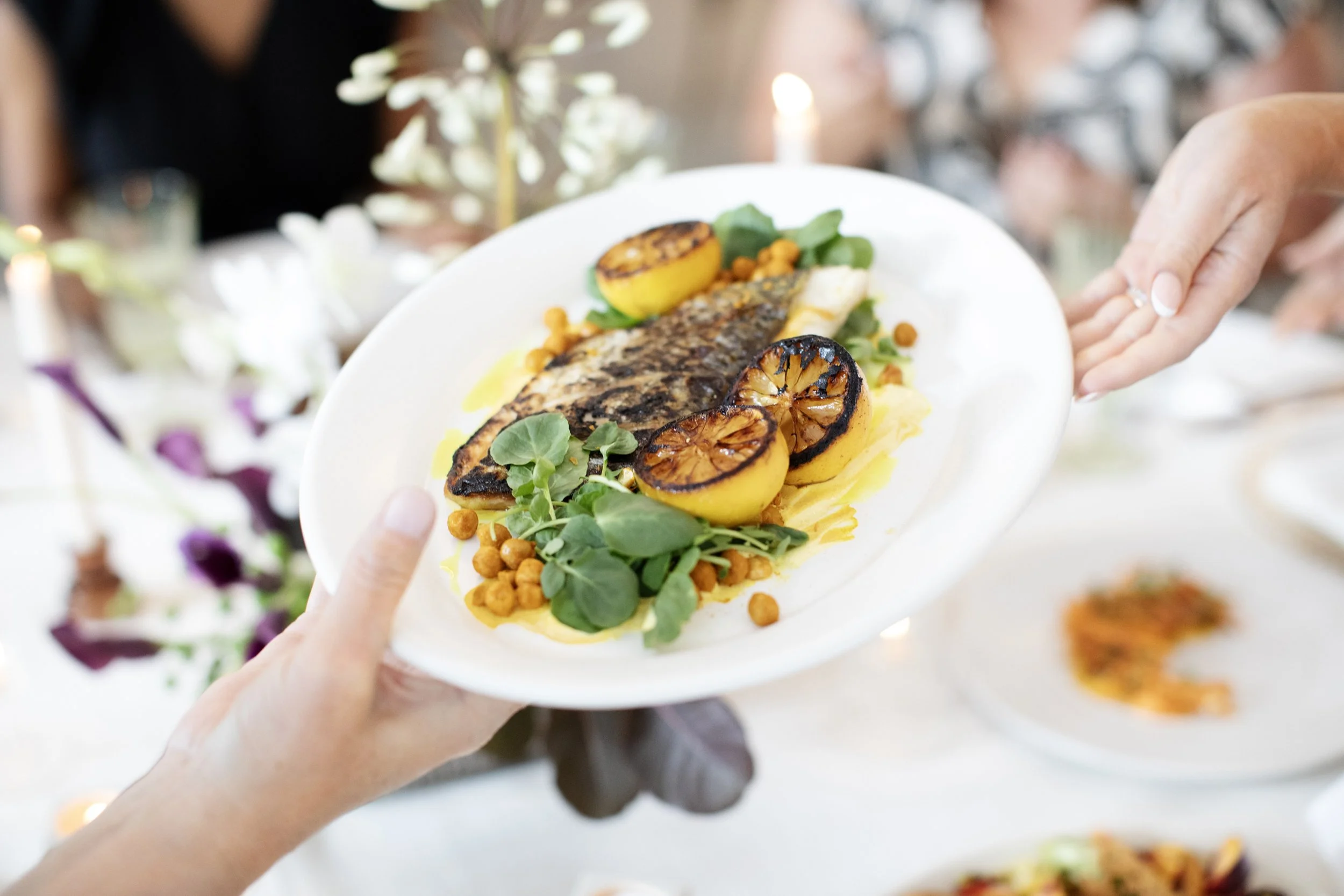
Food is one of the most personal parts of a wedding—and one of the most remembered. Long after the flowers wilt and the playlist is forgotten, guests remember what they ate, how the room felt… and whether they went back for seconds.
But before you get to the menu, there's a more foundational decision to make: how dinner is served. Your catering style shapes the energy in the room, the pace of the night, the floor plan, and more of your budget than you might expect. A formal plated dinner and a buffet can both be phenomenal—they just create entirely different evenings.
Still figuring out which catering style fits your wedding? Here’s what to know before you decide.
Plated Meals: Classic & Formal
Best for: Formal or black-tie weddings, smaller guest counts, and couples who want a structured evening where every element of the program has its moment.
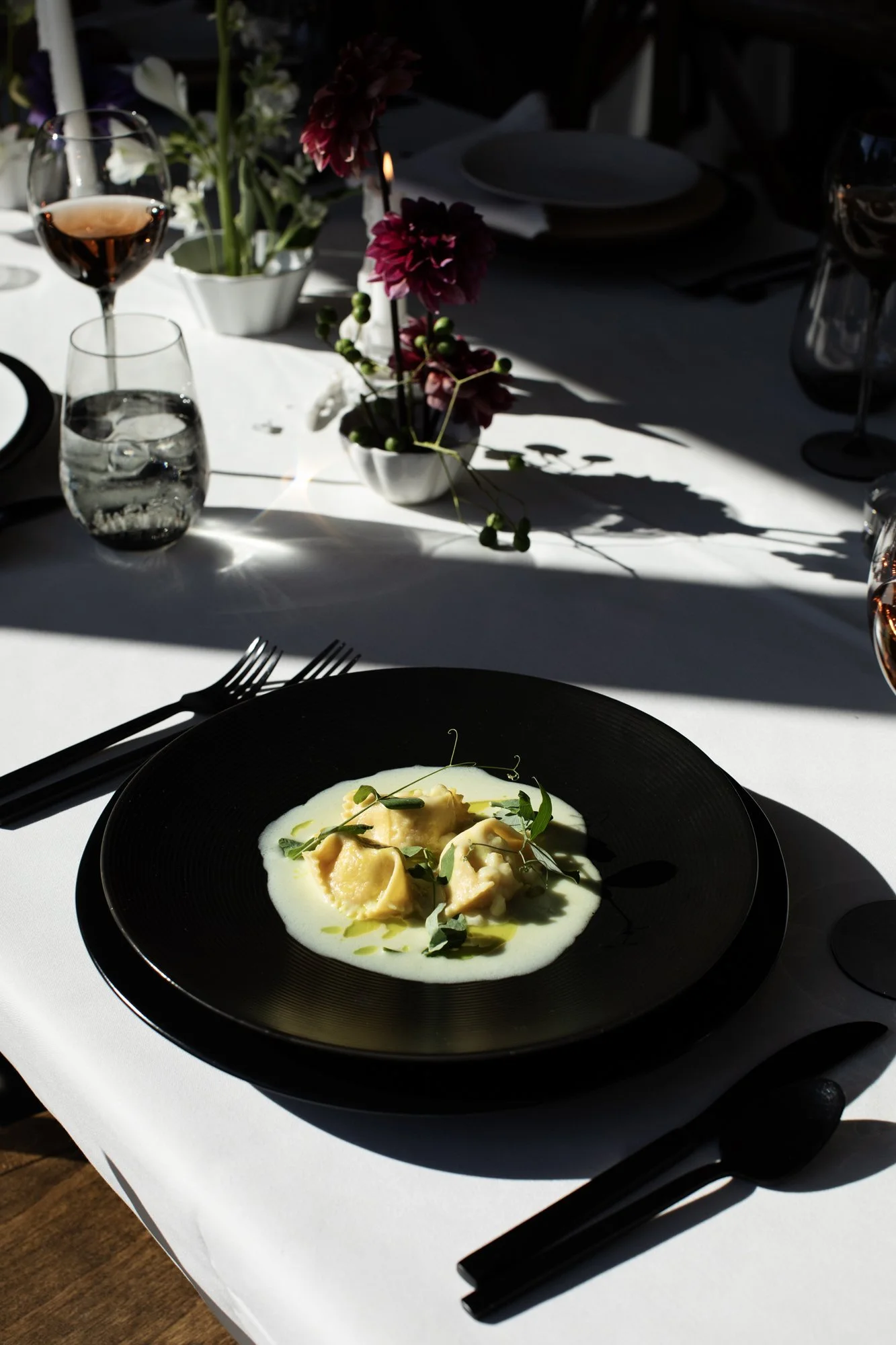
Our truffle agnolotti, perfectly plated.
Plated is the classic choice for a wedding reception. Guests are seated at assigned tables and served individual courses—typically bread, salad, an entrée, and dessert. It's the style most associated with formal receptions, and when it's executed well, it’s elegant and exciting.
And while it's the most traditional option, it doesn't have to feel stuffy. Pair it with passed appetizers during cocktail hour, a dessert station, or a late-night snack and you've got structure with plenty of fun built in.
Benefits of a plated meal:
Sets a formal tone, if that’s what you’re going for
Keeps guests seated and present through key program moments (speeches, toasts, first dances)
Gives you the most control over pacing, presentation, and the overall flow of the meal
Food is portioned per person, so you never have to worry about having too little or too much
Things to consider:
Plated service requires more staff than other formats, which is reflected in the overall cost
A proper multi-course service runs 1.5 to 2 hours—perfect if you want to linger, less ideal if your crowd wants to hit the dance floor by 7:30 pm
Guests have limited choices, typically selecting from two or three entrée options in advance
Sample plated menu:
Sourdough with honey whipped goat cheese & marinated olives
Baby kale & swiss chard salad with Parmesan, toasted almonds, pickled Swiss chard stems, lemon vinaigrette
Grilled hanger steak with roasted garlic mashed potatoes, roasted baby green top carrots, and demi glaze
Orange almond upside-down cake
Family-Style: Connected & Relaxed
Best for: Couples who want a relaxed, sociable reception without giving up the seated dinner feel.
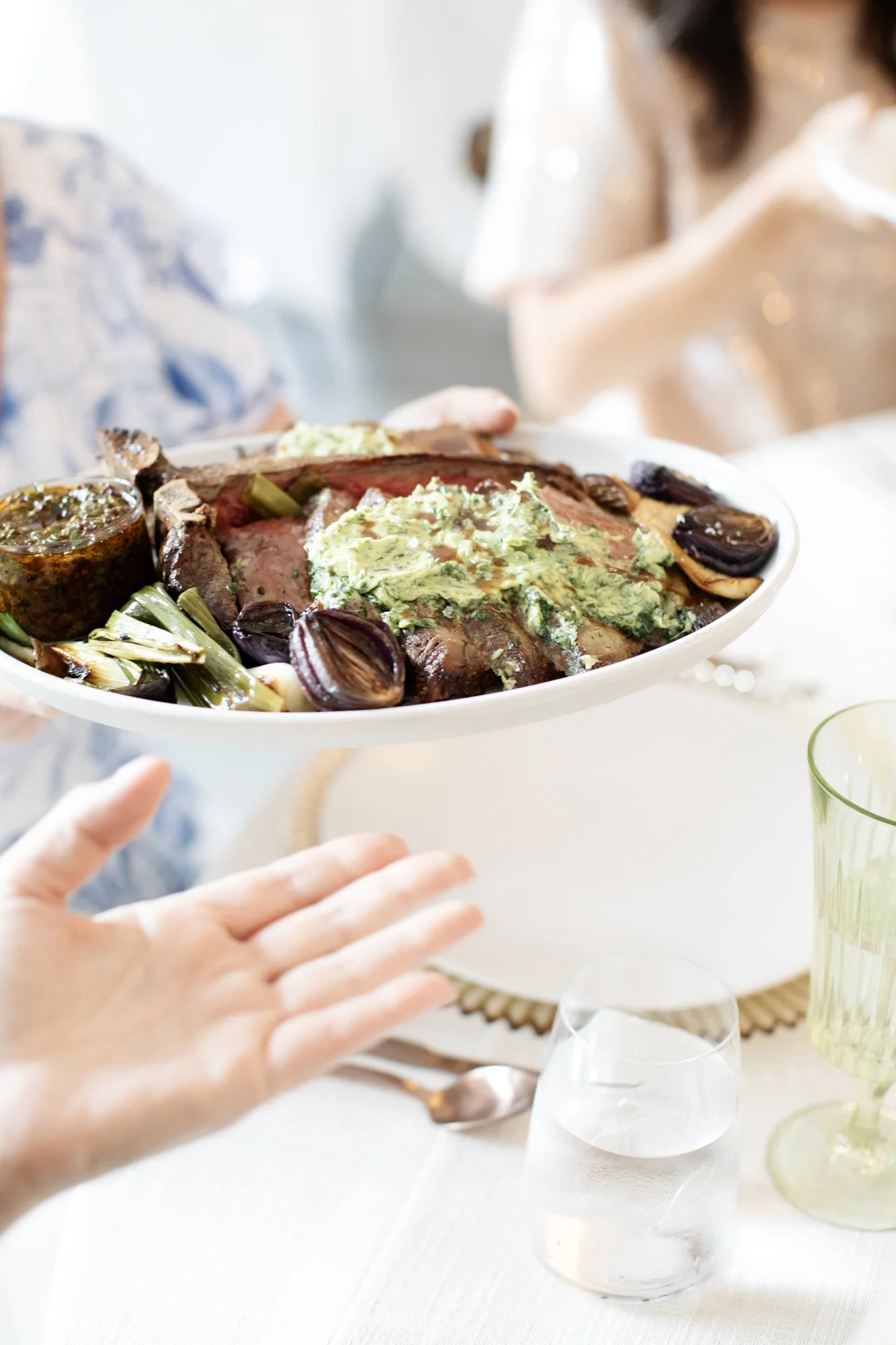
Pass the steak.
Family-style is the middle ground between a plated dinner and a buffet: the food comes to the table, guests help themselves, and the whole meal has a relaxed, communal feel. It's one of the best formats for getting guests to actually talk to each other—there's something about passing a dish across the table that helps break the ice!
Our family-style catering menus include up to three entrée options and two sides for sharing, along with a signature bread course and salad—enough variety to feel generous without overwhelming the table.
Benefits of family-style:
Feels relaxed and social while still elevated
Offers enough variety to accommodate different tastes and dietary restrictions
No meal cards or entrée selections to track (less RSVP admin, less stationery)
One of the faster formats for getting guests served
Things to consider:
Platters take up table space. If elaborate florals or a heavily styled tablescape are a priority, this format may require some creative compromise.
Works best for guest counts under ~150, where the communal feel really shines
Pro tip: Plan your table layout and decor with the spread in mind. We recommend sizing down centerpieces slightly to give the food the room it deserves—honestly, the gorgeous platters become part of the visual anyway!
Sample family-style menu:
Focaccia with salsa di parma
Arugula & endive salad with candied pecans, blue cheese, apple chips, apple cider dijon vinaigrette
Whole roasted chermoula chicken with zucchini ribbons, arugula, and pickled red onions
Marinated swordfish with confit tomato and cracked olives
Roasted broccolini with parmesan, chili flakes, and lemon
Roasted baby red potatoes
Chocolate pot de crème
Milk & honey cake with cinnamon whipped cream
Buffets: Flexible & Abundant
Best for: Casual to semi-formal weddings, larger guest counts, and couples who want a lively, generous spread where guests feel free to eat as much as they want
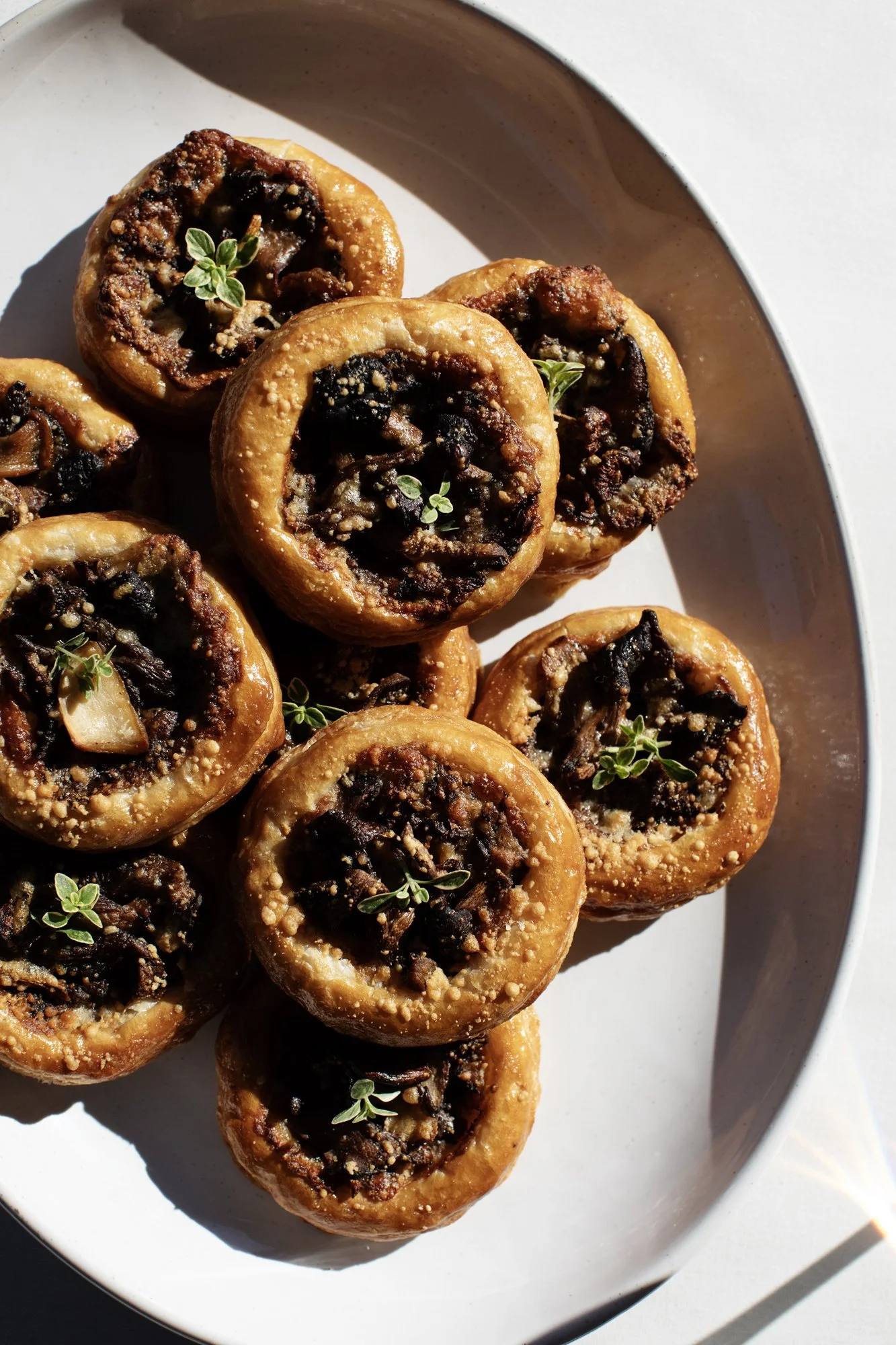
Help yourself.
Wedding buffets sometimes get a bad rap. We're here to set the record straight: done well, a buffet is one of the most generous, crowd-pleasing formats you can offer—and the food can still be creative, elegant, and delicious!
We love adding interactive stations to buffets to give guests a more elevated dining experience. A pasta station tossing bowls on demand. A raw oyster bar with a shucker on hand. Our molcajete station, where guacamole, queso, and ceviche are made fresh right in front of you. These upgrades turn dinner into an experience, and guests remember them long after the night is over.
Benefits of a buffet:
Offers the most variety of any seated format
No meal cards or entrée selections to track (less RSVP admin, less stationery)
Moves efficiently for large guest counts
Staffing costs run lower
Things to consider:
Less formal than plated or family-style, which may not suit every aesthetic
Requires thoughtful layout planning to avoid bottlenecks or long lines
Sample buffet menu:
Brioche with whipped butter with lemon zest, herbs, dried flowers, and flaky salt
Caesar salad with romaine, Caesar vinaigrette, shaved Parmesan, torn garlic croutons
Tomatillo-braised chicken thighs with cilantro, radish, and jalapeño
Mississippi pot roast with pepperoncini and herbs
Coconut-braised cabbage with crispy chickpeas and mint
Green rice pilaf
Roasted multi-colored carrots with red chermoula
Chocolate caramel trifle
Berry trifle
Food Stations: Unique & Immersive
Best for: Couples who want a high-energy, interactive reception in an open or non-traditional venue.
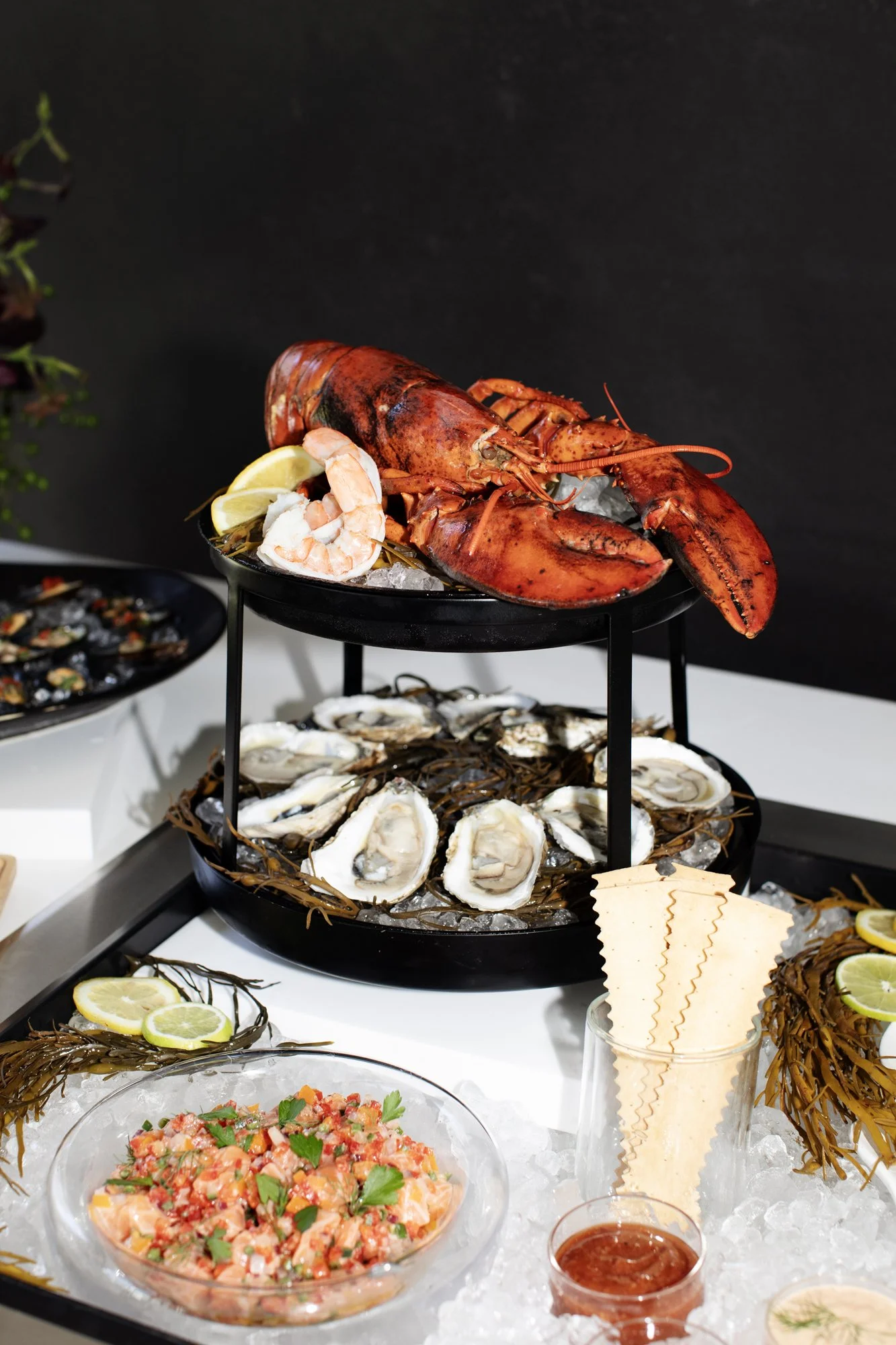
Seafood bar? Yes, please.
A food station setup takes the buffet concept and makes it more immersive. Instead of one centralized spread, individual stations are positioned throughout the space, each one dedicated to a specific dish or cuisine. Guests move through the room at their own pace, graze as they go, and the whole evening has a more social, exploratory energy.
(P.S.: Food stations are one of our specialties. Browse our menus for everything from classic carving stations to bento box stations, seafood bars, and more.)
Benefits of food stations:
Works beautifully in open, non-traditional venues
Highly customizable; stations can reflect your tastes and story
Creates a natural flow of movement through the room, which helps keep energy high all night
Chef-attended stations add a live, experiential element that guests love
Things to consider:
Requires enough space. Open, walkable layouts work best; tight or narrow venues can make traffic flow tricky.
Service costs run higher given the number of individual setups, and chef-attended stations require dedicated staffing.
Sample food station menu:
Passed Appetizers
Walleye cakes with caper and cornichon remoulade
BLT crostini with whiskey bacon jam, confit tomatoes, garlic aioli, and crispy brussels sprouts
Oyster mushroom shawarma skewers
Station #1: Queso, Ceviche, and Guacamole Bar
Station #2: Mediterranean Mezze Station
Station #3: Slider Station
Dessert Station: Ice cream sandwiches from our ice cream cart
Cocktail (Heavy Appetizers): Lively & Social
Best for: Couples who want a high-energy, social atmosphere over a seated dinner, venues with open or non-traditional layouts, and shorter or daytime receptions.
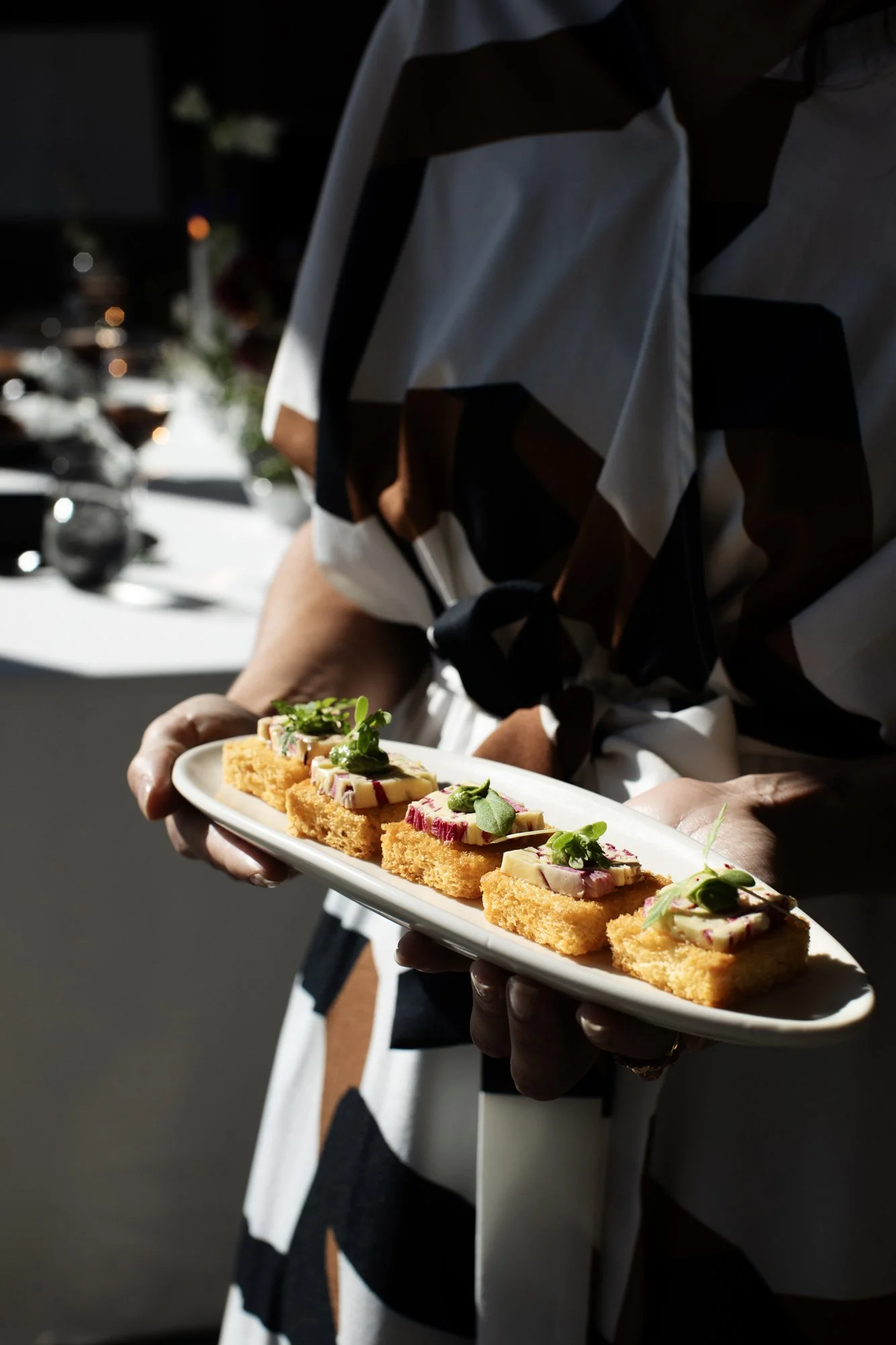
Apps on apps on apps.
A cocktail-style reception is a full commitment to the party—and an intentional departure from the traditional wedding dinner format. There's no seated meal, no assigned courses. Servers move through the room with passed bites, stations anchor different areas, and guests are mingling for most of the evening. When the menu is well-designed and there's enough food, nobody misses the sit-down meal (they're having too good a time!).
The social style of this format is what makes it special. People who'd never find each other at assigned tables get more time to chat and connect. It also opens up venues that don't work for traditional dining setups and often comes in at a lower per-head cost than a full dinner service—budget that can go toward the bar, the decor, or anything else that’s important to you.
The key to a great cocktail reception? Variety and volume. A strong approach combines passed bites with stationed appetizers so that the spread feels abundant. Plan to rotate through five or so passed items in the first part of the evening and introduce five entirely new ones for the second (so no one is reaching for the same crostini three hours in).
Benefits of a cocktail reception:
The most social format; guests mingle freely in a way that a seated dinner doesn't allow
Opens up non-traditional venues and layouts that wouldn't work for a sit-down dinner
Generally lower per-head cost than a full dinner service, with room to redirect budget elsewhere
Things to consider:
Volume is everything! Guests eat more than couples expect when they're standing and socializing, so it’s important to plan for enough.
Without a seated anchor, key moments like toasts and first dances require more intentional planning to pull off smoothly
Some guests (particularly older family members) arrive expecting a full meal; noting "cocktail reception to follow" on the invitation sets the right expectation
Depending on guest count and menu complexity, service costs can add up even without a full dinner
Sample cocktail-style menu:
Station: Grazing table
First wave of passed appetizers (lighter, more refined bites, great to pair with first beverages):
Lobster & avocado on brioche
Duck rillette on an orange crisp
Beef carpaccio
Rainbow veggie spring rolls with tamarind peanut dipping sauce
Vegan tofu with citrus sprout salad & avocado
Second wave of passed appetizers (heavier multi-bites, more playful and good for soaking up alcohol):
Firecracker shrimp sliders
Mini empanadas with picadillo beef and jalapeño aioli
Mini hardshell tacos (pork el pastor, pineapple)
Signature ginger-hoisin glazed meatballs
Fried chicken & waffles skewer
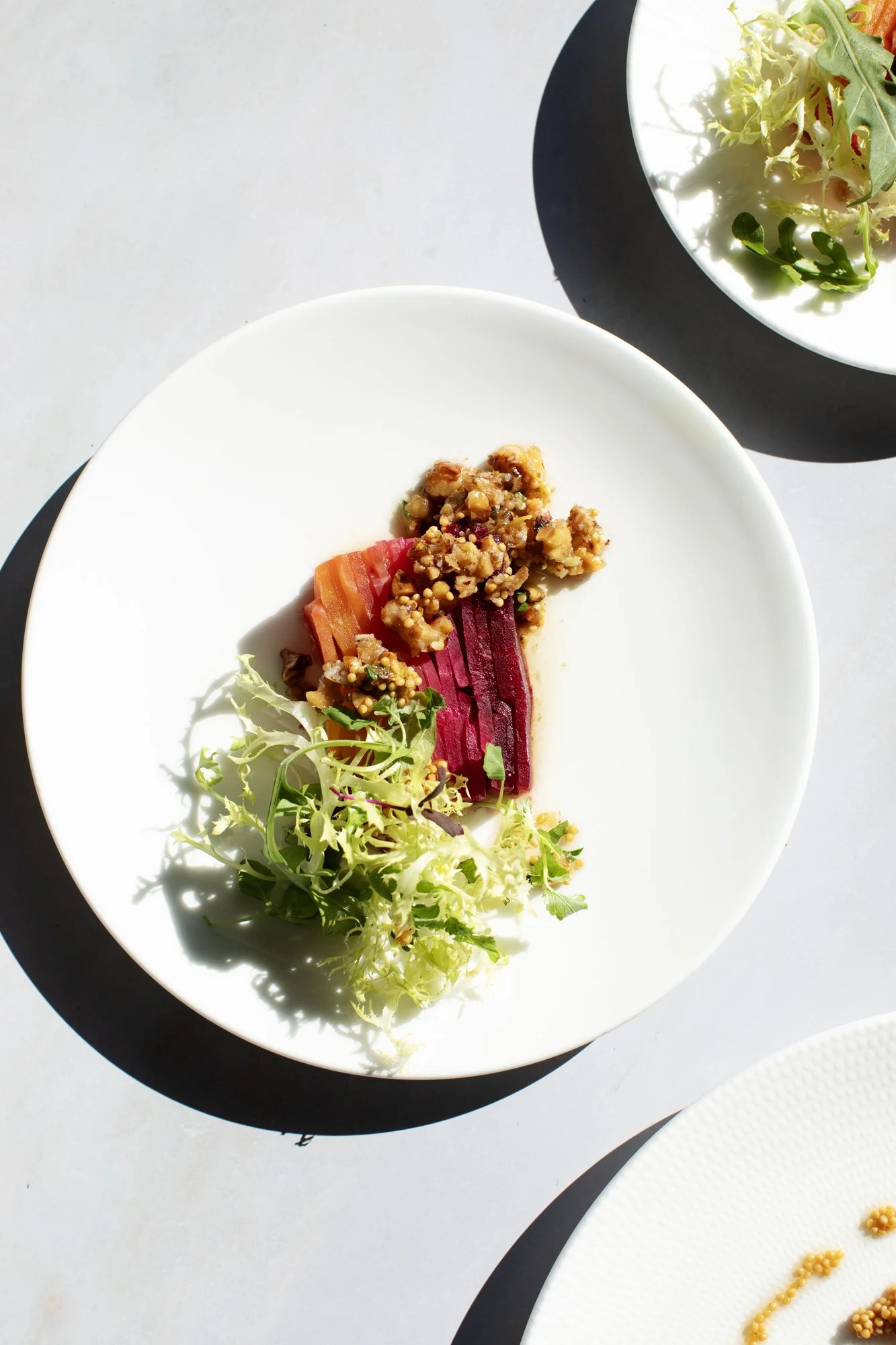
Roasted red & gold beet terrine.
How to choose the right fit
Still not sure which style to go with? Here are some questions to help you narrow it down.
What's the vibe you're going for? This sounds obvious, but it's the most important filter. A black-tie crowd in an Art Deco ballroom calls for something different than 50 people in a backyard.
How many guests are you expecting? Larger guest counts generally favor buffets, stations, or cocktail formats (they're easier to scale without creating chaos). Plated and family-style shine at smaller celebrations.
What does your venue actually allow? Some venues have limited kitchen facilities, strict noise curfews, or layouts that make certain formats impractical. Always have this conversation before you fall in love with a concept.
Where is most of your budget going? If the food is the priority, a buffet or family-style format often lets you put more of the budget into ingredients and variety. If the experience and service level are really important to you, a plated dinner or interactive stations are worth the investment.
How tight is your timeline? A multi-course plated dinner and a packed reception schedule don't always play nicely together. Think about how you want your event to flow before you commit to a format.
What time is your ceremony ending? A 4:00 pm ceremony gives you a very different reception window than a 7:00 pm one, and that affects whether a full plated dinner even makes sense logistically.
Do you have guests with complex dietary needs? This is worth discussing with your caterer early. Some formats accommodate restrictions more gracefully than others, and it's much easier to plan for upfront than to sort out last-minute.
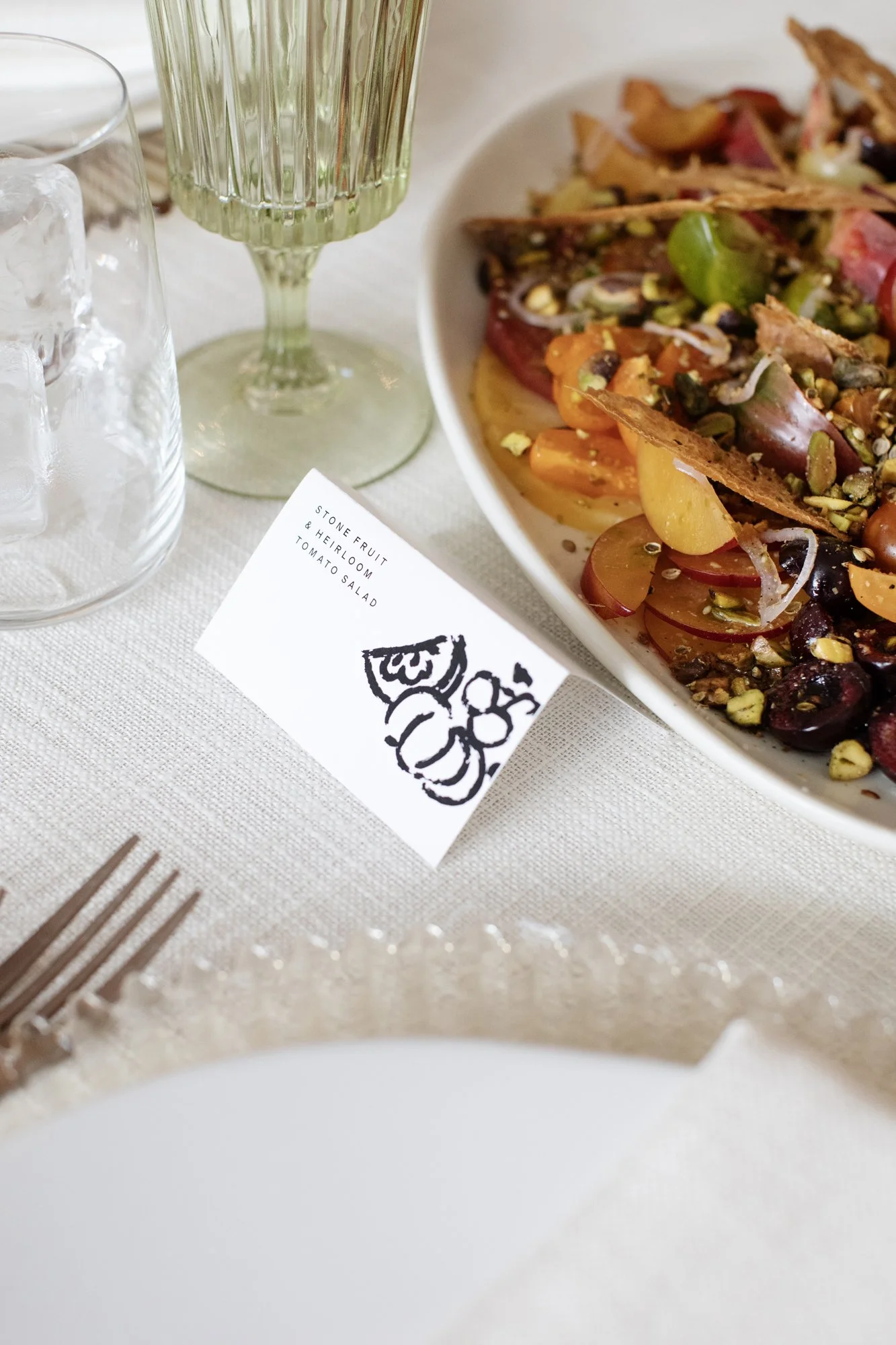
Our fabulous stone fruit & heirloom tomato salad, served family-style.
FAQ
What is the most popular wedding catering style?
Plated is still number one for weddings. Buffets are a popular option for budget-conscious couples—you still get incredible food and plenty of variety, just without the higher staffing costs of plated service.
Is a buffet cheaper than a plated dinner?
Often, yes. Buffets require fewer servers than plated dinners, so staffing is where you’ll see the most savings.
Do I need to note the meal style on the invitation?
For plated dinners with entrée selections, yes—guests will need to indicate their choice on the RSVP card. For cocktail-style receptions, a simple "cocktail reception to follow" sets the right expectation. Buffet and family-style typically don't need special notation.
How do I collect dietary restrictions?
Include a dietary notes field on your RSVP card or wedding website. The earlier you have this information, the better—especially for plated and family-style service where individual alternatives need to be planned in advance.
Pro tip: We recommend building at least one gluten-free and one vegetarian option into your menu from the start. That way, you naturally cover the most common dietary requests, so you only need to make special arrangements for specific allergies. Trying to accommodate every dietary request gets complicated fast and can drive up costs.
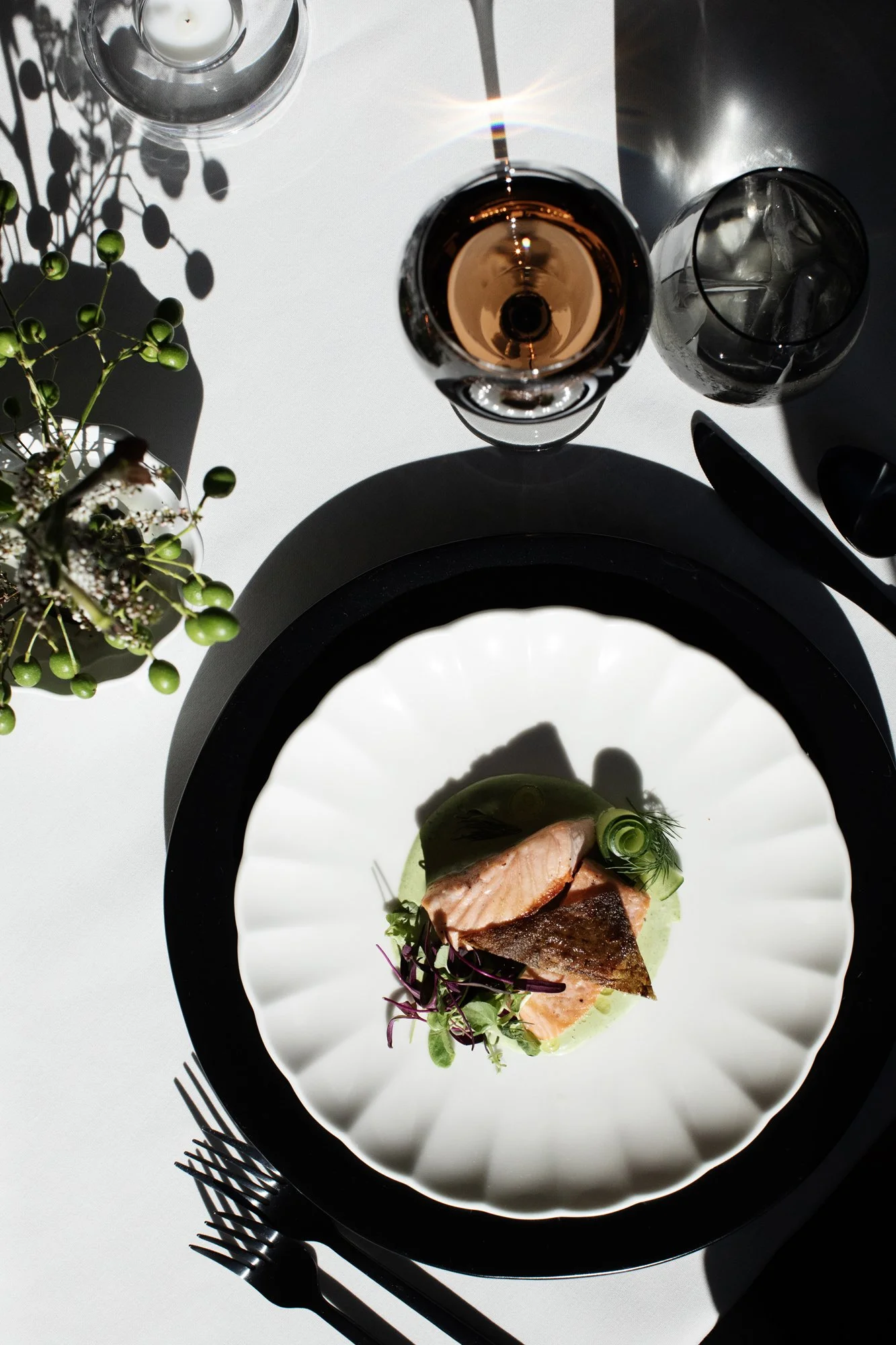
Pan-seared salmon with cucumber, yogurt, and dill.
Plated, family-style, buffet, stations, cocktail—every format on this list can make for an incredible wedding reception.
It really comes down to matching the catering style to the vibe you're going for, the practical realities of your venue and crowd, and what matters most to you about the evening (or morning, or afternoon… we love a brunch wedding, too).
We work closely with couples through every step of the planning process, from choosing a concept to designing a menu to pulling it all off beautifully on the big day.
Browse our menus to get a feel for what we can do, or get in touch to start planning.